


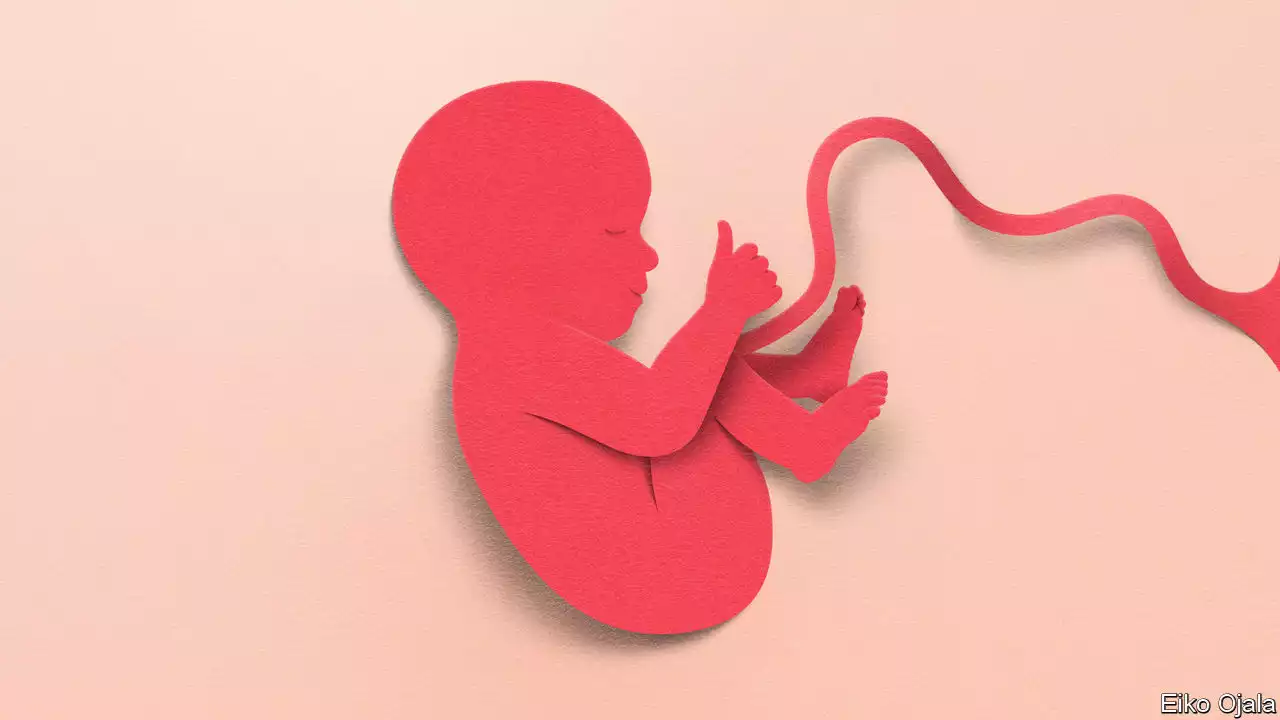
A better understanding of fertility should help raise the success rate of IVF, bringing down its emotional and financial costs. That is why it needs investment and regulation
In a world where one person in six suffers from infertility, such successes are rightly celebrated. Less discussed are. Most courses of treatment fail. That subjects women and couples to cycles of dreaming and dejection—and gives the fertility industry an incentive to sell false hope.
The obstacle is a lack of progress in understanding that determine fertility. At last, however, the science is making headway, holding out more promise and less heartache for generations of parents to come.has become better at making babies and safer for the women who bear the brunt of the treatment. The rate of twin and triplet deliveries has plummeted, reducing the number of risky pregnancies. Hormone treatments are safer. Combined with egg and sperm freezing, donation and surrogacy,has given many, including same-sex couples and singletons, a path to parenthood where they had none. Yet the process remains gruelling and costly. It is physically painful for women, and emotionally draining for both sexes. For many, fertility treatment is an unaffordable luxury; in America, for instance, a cycle can cost $20,000. Some countries ration treatment according to a conservative moral code. Until 2021 French law permittedonly for married heterosexual couples. Many countries including China forbid egg freezing, which extends reproductive years.babies born in 2018 required some 3m cycles. Many women go through round after round of hormone injections, sometimes moving from one clinic to the next. In America and Britain roughly half go home with a baby in their arms, even after several years and as many as eight cycles of treatment. This has fostered a fertility industry selling to repeat customers desperate to conceive. When a cycle fails, many clinics offer poorly regulated menus of “add-ons” that do not demonstrably raise the chances of success, and may even reduce them. They can charge hundreds to thousands of dollars for a treatment. These problems all share a fundamental cause. Although reproduction is one of the most basic aspects of human biology, scientists have an astonishingly poor grasp of how a new life comes about. The essentials are obvious: a sperm and an egg must meet. But many of the cellular, molecular and genetic underpinnings of babymaking remain a mystery. Little is known about how a woman’s stock of eggs is set before she is even born; or why they fade in number and quality until menopause, which among mammals is known to occur only in humans and five species of whale. The intricacies of how an embryo buries into the womb and connects to the blood supply are also mysterious. Infertility is often classed as “women’s health”, yet male factors play at least some role in roughly half of heterosexual infertile couples—though how is often unclear.is woefully inadequate. It was devised as a fix for the blocked Fallopian tubes that prevented Ms Brown’s mother from conceiving. But today, when more couples try for children later in life, a woman’s declining stock of eggs is increasingly likely to be the problem. Here,works by giving people more rolls of the dice, by collecting more eggs and maximising the odds that they will be fertilised. That will work for the lucky few, but without an entirely new approach and new treatments, many aspiring parents will endure one disappointment after another.reports, recent scientific work offers some hope. Researchers in Japan and America are exploiting stem cells, which have the ability to become any of the body’s many specialised tissues, to make eggs from skin and blood cells, a process called in vitro gametogenesis . In Japan healthy mouse pups have been created from cells that originated on the tips of their mothers’ tails. Earlier this year researchers announced that they had delivered mouse pups that shared two genetic fathers. One had contributed sperm, the other skin, which was first turned into stem cells and then into eggs. Some teams are working towards applying these techniques to humans. If cells safe enough to make healthy babies will ever be available, they are still far off. But the research is providing new insights into how sperm and eggs are made.means that researchers may no longer need to rely for their studies on donated eggs, sperm and embryos, often generously provided bypatients. Other teams are using stem cells to build embryo models . These will never see the inside of a womb but they can help show what happens to the real embryos that do. In time, novel treatments may follow. Gay couples could have children that are as genetically related to them as those of straight ones. Trans people who are undergoing gender reassignment could possibly do so without sacrificing their fertility.will remain important, and why it needs investment and regulation. A better understanding of fertility should help raise the success rate ofNew treatments could eventually herald the biggest transformation in fertility technology since Ms Brown was born. Polling shows that in many countries people have fewer children than they would like, partly because they are putting off babymaking until later. Where the sexual revolution of the 1960s and ’70s gave women the choice not to have babies if they did not wish to, emerging technology could usher in a new revolution, empowering women—and men—to have the babies they want, when they want them.
United Kingdom Latest News, United Kingdom Headlines
Similar News:You can also read news stories similar to this one that we have collected from other news sources.
 Bye Bye Beige: Red Is Making A Fiery Comeback This AutumnVogue’s breakdown of the red trend, from the stars who wore red to the Oscars to the brands who did full-look red for autumn/winter 2023. Plus all the best red fashion pieces to buy now.
Read more »
 New ways of making babies are on the horizonA new field of fertility research called “in vitro gametogenesis” could herald the biggest change in reproductive technology since IVF itself
Read more »
 Heinz making big change to its ketchup bottles from next monthThey say it will make it easier to get the last drops out
Read more »
 IVF remains largely a numbers gameGlobally, between six and seven out of every ten IVF cycles will not result in pregnancies which go to term. As a result, many women will try more than once. The older a woman gets, the steeper the odds
Read more »
 Chitty Chitty Bang Bang making a big noise in Wellington this weekendOne of cinema’s most well-known cars will be flying into the county this weekend.
Read more »
 Former vice president Mike Pence making 3-day NH swing this weekFormer Vice President Mike Pence will be in New Hampshire this week and is scheduled to make public appearances throughout the state from Wednesday through Friday. In a press release from Pence’s campaign team, a schedule of events for the 2024 GOP presidential candidate includes meet and greets and various town hall meetings throughout the state. Pence will start off…
Read more »