


Microsoft's quantum computing chip, Majorana 1, utilizes novel materials and a Topological Core architecture, promising to achieve million-qubit scalability within years. This advancement positions Microsoft at the forefront of practical quantum computing, potentially revolutionizing scientific discovery and problem-solving.
Microsoft claims to have developed a quantum computing chip utilizing novel materials, projected to pave the way for practical quantum computers in a matter of years rather than decades. This optimistic forecast, while welcomed by those who believe quantum computing won't be feasible for another 20 years, invites a healthy degree of skepticism from the rest of us.
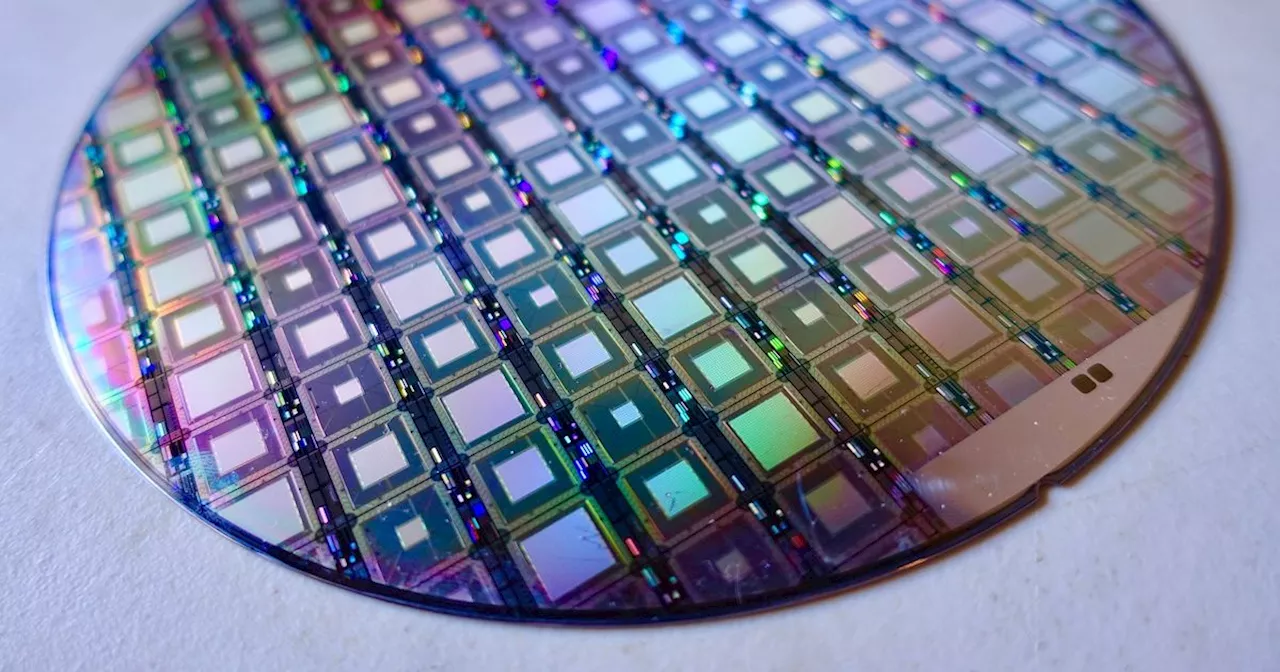
The chip, dubbed Majorana 1, is based on a Topological Core architecture capable of, eventually, scaling to support millions of quantum bits (qubits). Unlike digital bits, which possess two states (one and zero), qubits can exist in a superposition of both states, representing an infinite set of possibilities until measured. This unique property theoretically allows quantum computing to tackle calculations beyond the reach of classical computers, provided existing hurdles are overcome.One such hurdle is the disparity between physical qubits – two-state quantum systems tied to hardware – and logical qubits – high-level abstractions used for programming. Achieving practical quantum computing necessitates a significantly higher number of physical qubits. Microsoft's Majorana 1, boasting 105 physical qubits, represents a considerable leap forward. However, directly comparing qubit counts across devices employing different techniques remains challenging.Despite this, Microsoft asserts its path to a million qubits, a crucial milestone for solving complex problems. The Majorana 1 chip utilizes a Topological Core, built with a material called a topoconductor – a topological superconductor that creates a novel state of matter distinct from solids, liquids, or gases. This state was predicted a century ago by mathematician Ettore Majorana, and researchers have since been seeking the elusive Majorana particle (Majorana fermion). Microsoft claims to have discovered and harnessed this particle, enabling the creation of a topoconductor, a new type of semiconductor operating as a superconductor. The chip is constructed from indium arsenide, a material used for detecting infrared light and exhibiting superconductivity at extremely low temperatures.This breakthrough allows Microsoft to develop quantum computers based on topological qubits, which require less error correction and are therefore more scalable than alternative approaches. Unlike conventional quantum computers requiring vast physical spaces, Majorana 1 is designed to fit within Azure datacenters. This compact design, coupled with the potential for scalability, positions Microsoft at the forefront of practical quantum computing. The company has secured funding from DARPA (Defense Advanced Research Projects Agency) to develop a quantum computer suitable for industrial applications. This collaboration signifies a commitment to advancing quantum computing towards its practical implementation, driving scientific discovery and solving real-world problems
QUANTUM COMPUTING MICROSOFT MAJORANA 1 TOPOLOGICAL CORE QUBITS SCALABILITY DARPA
United Kingdom Latest News, United Kingdom Headlines
Similar News:You can also read news stories similar to this one that we have collected from other news sources.
 Microsoft Unveils the Special Edition Pulse Cipher Xbox ControllerMicrosoft introduces a new transparent Xbox controller with a striking deep red design, the Special Edition Pulse Cipher. Featuring a transparent top shell, red rubberized grips, and metallic accents, this controller offers a unique look and feel. It's available for pre-order now.
Read more »
 Oxford Researchers Achieve Quantum Teleportation Milestone, Paving the Way for a Quantum InternetA team of researchers at the University of Oxford has successfully demonstrated quantum teleportation using a powerful quantum supercomputer, marking a significant step towards building a scalable quantum internet. This breakthrough achieved the transfer of logical gates, the fundamental building blocks of quantum algorithms, between separate quantum computers.
Read more »
 Quantum Teleportation Achieved Between Supercomputers, Paving Way for Quantum InternetResearchers at the University of Oxford have successfully demonstrated quantum teleportation between two powerful quantum supercomputers, marking a significant milestone in the development of quantum computing. This breakthrough allows for the transfer of quantum information, the building blocks of quantum algorithms, across a network link, effectively creating a rudimentary 'quantum network'. This paves the way for a future 'quantum internet' with unprecedented computational capabilities.
Read more »
 Scientists Teleport Quantum Gates Between Distant Computers, Paving the Way for Quantum InternetResearchers at the University of Oxford achieve a significant breakthrough in quantum computing by successfully teleporting logical gates between two quantum computers separated by over six feet. This breakthrough could potentially solve the scalability problem of quantum computers and pave the way for the development of a quantum internet.
Read more »
 Oxford Researchers Teleport Quantum Gates, Paving the Way for Distributed Quantum ComputingOxford University researchers have achieved a significant milestone in quantum computing by successfully teleporting a controlled quantum gate between two separate modules. This breakthrough, published in Nature, marks the first demonstration of distributed quantum computing using deterministic gate teleportation.
Read more »
 Microsoft Claims Breakthrough in Quantum Computing with Majorana ParticlesMicrosoft claims to have achieved a major breakthrough in quantum computing by successfully harnessing Majorana fermions, a unique type of particle representing a fourth state of matter. This could lead to the development of practical quantum computers by the end of the decade.
Read more »