
This article delves into the claims made by Quantum Blockchain Technologies (QBT) regarding its AI-powered Bitcoin mining prediction tool. It analyzes the potential implications of such technology, the controversy surrounding its effectiveness, and the limitations of QBT's publicly available testing data. The article also explores the complexities of Bitcoin mining and the challenges of verifying the accuracy of QBT's claims.
It's easier to explain retail trading of penny shares as a hobby than an investment. There's a gambling aspect, sure enough. Sometimes a stock will double, or halve, or wipe out when the CEO runs off to Greece. Those kinds of events are occasional, however, whereas the hobbyist aspects are constant. Most of the enjoyment derived from penny-stock ownership seems to come from poring over the literature, fighting on message-boards, and badgering interested parties.
FT Alphaville last year wrote a luxuriantly long post about Quantum Blockchain Technologies, an Aim-quoted former dotcom incubator, hotelier and restaurateur that says it has discovered methods to optimise bitcoin mining. The post attracted more reader feedback than any other by the author in recent times. That’s in spite of QBT having a market cap on publication of just over £10mn. Today, QBT’s market cap is just over £20mn, the shares having jumped nearly 200 per cent following its announcement on Friday of “a breakthrough achievement for its predictive Bitcoin Artificial Intelligence (“AI”) model mining tool”: We asked on Friday morning for a demonstration. QBT said we could go to Italy or, after a nudge, offered for its tech team to send us a demonstration video. We chose option two. The video still hasn't arrived. If it does in the near future, we'll update the post. To recap, bitcoin uses a calculation lottery to determine which miner creates the next block for the blockchain and takes the reward. QBT says it can use AI and whatnot to estimate the likelihood of producing the winning block before the calculation is complete. It’s a controversial claim. Discovering patterns in bitcoin mining could be important, as it might reveal a bug in a crypto protocol that’s used in a lot of security infrastructure. Less important would be if the patterns were a side-effect of some quirk in the network rather than the protocol, but its inventors would still have a money-printing machine they’d be wise to keep secret. (For the moment, QBT’s money-printing machine is Aim.) QBT had previously said that in lab tests it was able to ditch blocks with no chance of winning “almost 50 per cent of the time”. Friday’s announcement talks of a 30 per cent performance improvement in live testing, though there’s plenty of qualification. QBT’s release mentions that live testing started at around block 879,000, suggesting the live-chain experiment ran for less than a week. (The chain was approximately at block 880,000 by the time of publication, so on 10-minute cycles that’s about 1,000 blocks, with each block minting 3.125 new bitcoins.) ASIC chips are quick and efficient but expensive to manufacture, as they only have one purpose, whereas FPGA chips swap efficiency for flexibility. Bitcoin network difficulty is at a record high, so FPGAs tend only to be used only for hopping on whichever shitcoin is in vogue. Even using the newest bitcoin ASICs, a lone operator still has a one-in-a-quadrillion chance of mining the next block. For that reason, professional miners smooth out returns by pooling resources, meaning everyone takes a share of rewards proportional to the processing power they contribute to the pool. QBT’s live test uses one of these pools, which makes it more difficult to grasp what exactly is being tested. One way to think about it would be as a jackpot-only lottery syndicate where one syndicate member believes they can sense unsuccessful tickets post-purchase. The lottery operator refunds spoiled tickets before the draw at 30p in the pound, so premonition is a useful talent. The syndicate member can claim partial refunds for low-confidence tickets, confirming after the draw that they would’ve lost. Taking pre-draw refunds would lower their cost of losing. Of course, there’s an incalculably small chance of any ticket turning out to be the winner. Maybe the syndicate member only thinks they have supernatural predictive abilities, in which case they’re mucking tickets randomly. If these spoiled and partially refunded tickets were excluded from the total in the syndicate, it’d mean a smaller cut of winnings. The 30 per cent profit from refunds would in effect be a 70 per cent loss — though given the low odds of anyone hitting the jackpot, such an inefficiency might take a very long time to average out. And if the syndicate didn’t know tickets were being spoiled, the member might be claiming a share of winnings based on tickets they didn’t have. Either way, not good. To be clear, we have no evidence to suggest that QBT’s testing is flawed. We have seen no evidence either wa
Finance QUANTUM BLOCKCHAIN TECHNOLOGIES BITCOIN MINING AI PREDICTION STOCK MARKET AIM FINTECH BLOCKCHAIN
United Kingdom Latest News, United Kingdom Headlines
Similar News:You can also read news stories similar to this one that we have collected from other news sources.
 US Bitcoin Miners Stockpile Crypto to Weather Competition and Energy CostsUS bitcoin miners are amassing large quantities of bitcoin to navigate increasing competition and rising energy costs. Companies like Mara Holdings, Riot Platforms, and CleanSpark have raised billions from investors, using the funds to purchase more bitcoin. This strategy is driven by a combination of factors, including the potential for future price increases, the need to secure profitability amidst shrinking mining rewards, and the influence of Donald Trump's pro-bitcoin stance.
Read more »
 Quantum Computing Stocks Plunge After Nvidia CEO's 20-Year Timeline PredictionShares in publicly traded quantum computing companies experienced significant drops following Nvidia CEO Jensen Huang's statement at CES that practical quantum computers may still be 20 years away. Huang's prediction, while realistic, highlighted the industry's challenges and added to the existing downturn in the sector.
Read more »
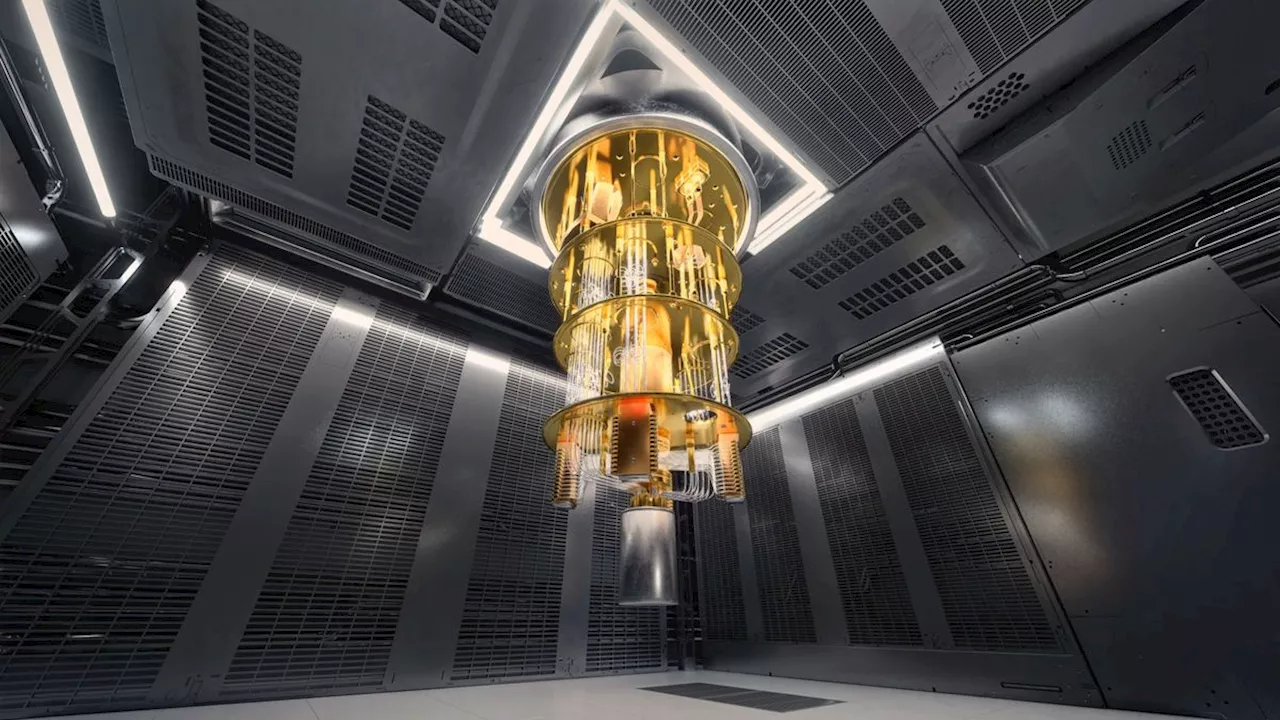 Nvidia CEO Says Useful Quantum Computers Are 15-30 Years AwayNvidia CEO Jen-Hsun Huang believes that practical quantum computers are still 15 to 30 years away, despite recent advancements in the field. Huang's prediction comes amidst a decline in quantum computing company stocks, with some losing over 40% of their value. Huang emphasizes that while quantum computing excels at specific niche calculations with small data sets, it's not a silver bullet solution for all problems.
Read more »
 Nvidia plots Quantum Day at GTC 2025 – for tech it called a distant dreamDon't believe the hype? GPU maker jumps on the bandwagon anyway
Read more »
 First Quantum Minerals Adjusts Production Guidance, Focuses on Zambia Amid Panama Mine HaltFirst Quantum Minerals released preliminary production figures for 2024 and updated its guidance for 2025 to 2027. The company is prioritizing its Zambian operations as it anticipates the Panama mine will remain suspended due to ongoing legal challenges. Production forecasts for 2025 and 2026 have been lowered due to a conservative ramp-up at the Kansanshi mine and scheduling delays at the Sentinel mine. First Quantum projected copper production of 430,000-490,000t for 2027, along with 200,000-225,000oz of gold and 30,000-40,000t of nickel.
Read more »
 Quantum Blockchain Technologies Claims Bitcoin Mining BreakthroughFT Alphaville investigates Quantum Blockchain Technologies' (QBT) claims of a breakthrough in its predictive Bitcoin mining AI model. Despite a 200% surge in share price following the announcement, QBT has yet to provide a demonstration of its technology. The article analyzes the plausibility of QBT's claims and the challenges of evaluating their methods.
Read more »