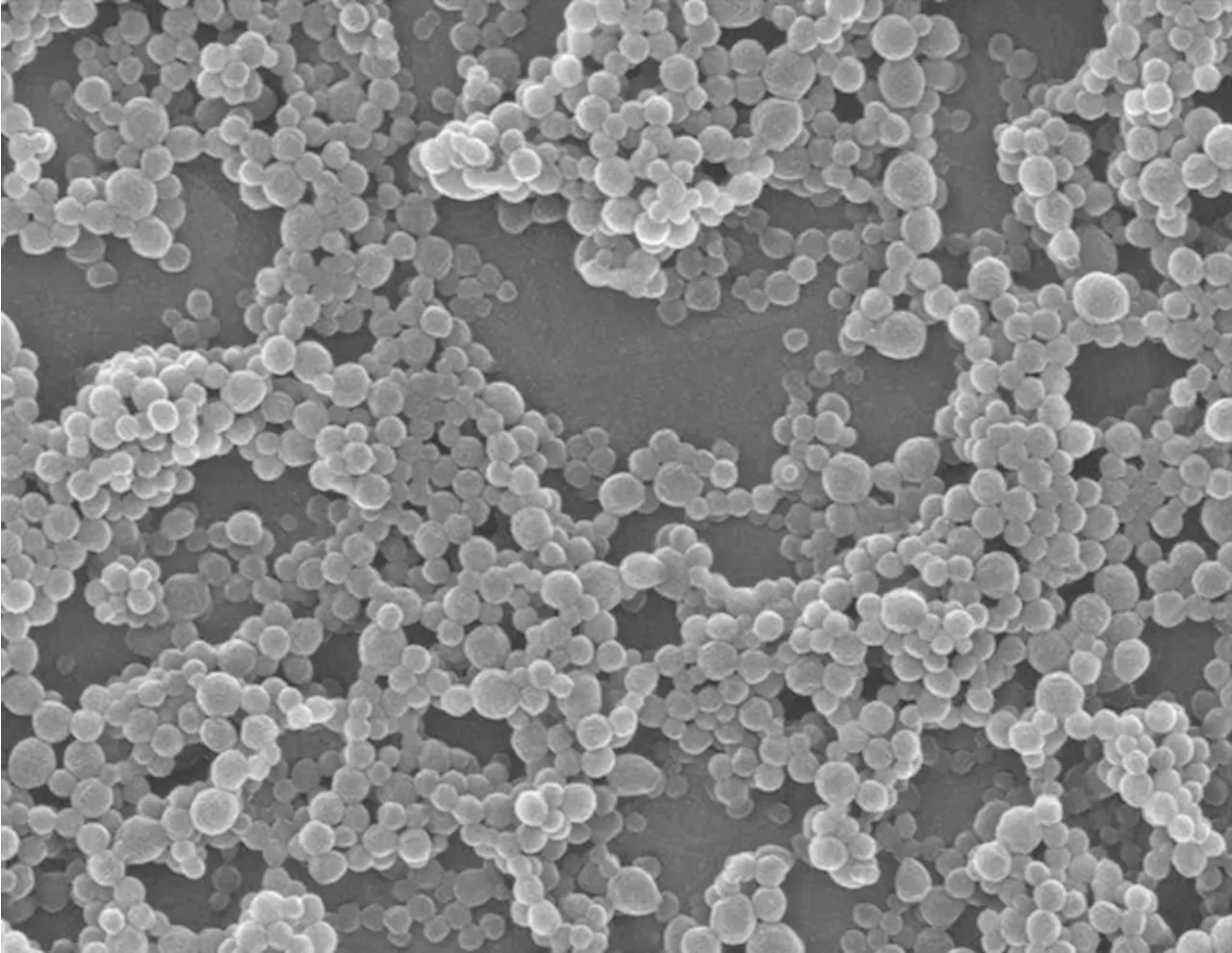
Researchers at the University of Pennsylvania have modified lipid nanoparticles (LNPs) to cross the blood-brain barrier and target specific brain cells, offering a potential breakthrough for treating neurological diseases.
University of Pennsylvania School of Engineering and Applied ScienceDec 18 2024 Penn Engineers have modified lipid nanoparticles -; the revolutionary technology behind the COVID-19 mRNA vaccines -; to not only cross the blood-brain barrier but also to target specific types of cells, including neurons.
This breakthrough marks a significant step toward potential next-generation treatments for neurological diseases like Alzheimer's and Parkinson's. In a new paper in Nano Letters, the researchers demonstrate how peptides -; short strings of amino acids -; can serve as precise targeting molecules, enabling LNPs to deliver mRNA specifically to the endothelial cells that line the blood vessels of the brain, as well as neurons. This represents an important advance in delivering mRNA to the cell types that would be key in treating neurodegenerative diseases; any such treatments will need to ensure that mRNA arrives at the correct location. Previous work by the same researchers proved that LNPs can cross the BBB and deliver mRNA to the brain, but did not attempt to control which cells the LNPs targeted. Our first paper was a proof-of-concept lipid nanoparticle design. It was like showing we could send a package from Pennsylvania to California, but we had no idea where in California it would end up. Now, with peptides, we can address the package to specific destinations with shared features, like every house with a red mailbox." The challenge of accessing the brain Crossing the BBB is difficult because the structure has evolved to keep out virtually any dangerous or foreign molecules, including most medicines; mRNA molecules are too large to penetrate the barrier, as are most pharmaceuticals. The BBB also actively expels materials it deems hazardous. "You can inject a treatment directly into the brain or spine, but these are highly invasive procedures," says Emily Han, a doctoral student in the Mitchell Lab and the paper's first author. Because the BBB allows fat-soluble molecules through , certain formulations of LNPs, which are partially made of the same family of fatty compounds found in everyday oils, can sneak through into the brain. Peptides vs. antibodies Until now, most research on targeting specific organs with LNPs has focused on combining them with antibodies, large proteins that function like biological nametags. "When you put antibodies onto LNPs, they could become unstable and larger in size, which makes it really hard to squeeze through the barrier," says Han. In contrast to antibodies, which can be hundreds of amino acids in length, peptides are just dozens of amino acids long. Their smaller size means they're not only easier to place in large numbers onto LNPs but cheaper to manufacture. Peptides are also much less likely than antibodies to aggregate during LNP formulation or to provoke unintended immune responses. Related StoriesThe choice to use peptides started with an unexpected encounter between Han and a bat that flew into her room, potentially exposing her to rabies. While researching the vaccines she received against the disease, Han learned that one of the ways the rabies virus crosses the BBB is through the rabies virus glycoprotein. "I then stumbled across one of our most promising targeting peptides," Han says, a molecule known as RVG29, a 29-amino-acid segment of that protein. Testing the concept To confirm the peptides were functioning as intended, the researchers first needed to verify they adhered to the LNPs. "Our LNPs are a complex mixture of nucleic acids, lipids and peptides," says Han. "We had to optimize quantification methods to pick out the peptides against all those other signals." Once they knew the peptides had adhered to the LNPs, the researchers then had to determine whether or not the peptide-functionalized LNPs actually reached the intended targets in animal models. "It's really difficult to set up," says Han, "because in the brain, you have so many different cell types and a lot of fat that can interfere with measurements." For more than six months, Han painstakingly developed a protocol to carefully take apart brain tissue, almost like a mechanic disassembling an engine. Future directions Next, the team aims to determine what fraction of neurons must be treated with pLNPs to meaningfully alleviate symptoms or potentially cure neurological diseases. "Returning to the same analogy, do we need to send these to every house with a red mailbox, or just 10% of them? Would 10% of neurons be enough?" asks Mitchell. Answering this question will guide the development of even more efficient delivery strategies, bringing the promise of mRNA-based treatments for Alzheimer's, Parkinson's and other brain diseases closer to reality. This study was conducted at the University of Pennsylvania School of Engineering and Applied Science and supported by the U.S. National Institutes of Health , the Burroughs Wellcome Fund, the US National Science Foundation , and the American Cancer Society . Additional co-authors include Sophia Tang, Dongyoon Kim, Amanda M. Murray, Kelsey L. Swingle, Alex G. Hamilton, Kaitlin Mrksich, Marshall S. Padilla and Jacqueline Li of Penn Engineering, and Rohan Palanki of Penn Engineering and the Children's Hospital of Philadelphia. Journal reference:Han, E. L., et al. . Peptide-Functionalized Lipid Nanoparticles for Targeted Systemic mRNA Delivery to the Brain. Nano Letters. doi.org/10.1021/acs.nanolett.4c05186.
NANOTECHNOLOGY NEUROLOGICAL DISEASES ALZHEIMER's DISEASE PARKINSON's DISEASE BLOOD-BRAIN BARRIER
United Kingdom Latest News, United Kingdom Headlines
Similar News:You can also read news stories similar to this one that we have collected from other news sources.
 Penn engineers cook up a new way for safer, more effective mRNA therapiesPenn Engineers have cooked up a new way to improve mRNA delivery, developing an optimal 'recipe' for ionizable lipids -; key ingredients in lipid nanoparticles (LNPs), the molecules behind the COVID-19 vaccines and other innovative therapies.
Read more »
 Researchers develop new approach to effectively deliver therapeutics into the brainResearchers at the Icahn School of Medicine at Mount Sinai have developed an innovative approach-;demonstrated in mouse models and isolated human brain tissue-;to safely and effectively deliver therapeutics into the brain, providing new possibilities for treating a wide range of neurological and psychiatric diseases.
Read more »
 Engineers Find 132-Year-Old Message in a Bottle Inside Scottish LighthouseDuring repairs at the Corsewall Lighthouse in Scotland, engineers uncovered a message in a bottle from 1892, detailing the installation of a new lantern and lens. The note, written by previous engineers and lighthouse keepers, is a rare historical artifact.
Read more »
 Engineers Find 132-Year-Old Message in a Bottle Inside Scottish LighthouseDuring repairs at the Corsewall Lighthouse, engineers uncovered a historic message in a bottle left by the previous team in 1892. The note, written with quill and ink, described the installation of a new lantern and lens.
Read more »
 Orbit Discovery and Evergreen Theragnostics Expand Collaboration to Develop Targeted TherapiesOrbit Discovery and Evergreen Theragnostics have extended their research collaboration to identify novel targeting peptides for radiopharmaceutical delivery, aiming to advance next-generation therapies with enhanced precision and efficacy.
Read more »
 Penn-led consortium to advance imaging of brain diseasesA Penn Medicine-led consortium of radiology and chemistry researchers across the United States will advance imaging of diseases like Parkinson's by testing radiotracers they identified that illuminate α-synuclein (αSyn) or 4R tau proteins on positron emission tomography (PET) scans.
Read more »