


A new collaboration between Northwestern University and Georgia Tech has resulted in the creation of a novel organic electrochemical neuron that mimics the function of human neurons, opening up exciting possibilities for the development of more advanced artificial perception systems.
Artificially engineered biological processes, such as perception systems, have long been a challenging target for organic electronics experts. The complexity of human senses, which rely on an adaptive network of sensory neurons that communicate by firing in response to environmental stimuli, has made replication a difficult feat. However, a groundbreaking collaboration between Northwestern University and Georgia Tech has yielded significant progress in this field.
The team has developed a novel high-performance organic electrochemical neuron that responds within the frequency range of human neurons. This breakthrough paves the way for more sophisticated and lifelike artificial perception systems. The researchers took their innovation a step further by designing other organic materials and integrating their engineered neurons with artificial touch receptors and synapses. This resulted in the creation of a complete perception system capable of real-time tactile signal sensing and processing. The research, detailed in a paper published in the journal Proceedings of the National Academy of Sciences (PNAS), holds immense potential for advancing intelligent robots and other systems currently hindered by less powerful sensing systems. The study highlights the remarkable progress in organic electronics and its application in bridging the gap between biology and technology. The artificially engineered neuron boasts reduced footprint and outstanding neuronal characteristics, enabling the development of a complete tactile neuromorphic perception system that mimics real biological processes. According to corresponding author Tobin J. Marks, Northwestern's Charles E. and Emma H. Morrison Professor of Chemistry, existing artificial neural circuits typically fire within a narrow frequency range. In contrast, the synthetic neuron developed in this study achieves unprecedented performance in firing frequency modulation, offering a range 50 times broader than existing organic electrochemical neural circuits. This exceptional capability establishes the device as a major advancement in organic electrochemical neurons. The team achieved this feat through a collaborative approach, with researchers from diverse backgrounds—organic synthesis, electronic device design, and system integration—working together to bring this complex project to fruition. The human brain's intricate network of 86 billion neurons, constantly firing and sensing, presents a formidable challenge to recreate. Scientists face limitations in both design footprint and scalability. Future models will focus on further reducing the device's size, bringing the project closer to fully mimicking human sensing systems. This research was supported by several funding sources, including the Air Force Office of Scientific Research, the National Science Foundation, Flexterra Corporation, and the National Natural Science Foundation of China
ORGANIC ELECTRONICS NEURON PERCEPTION ROBOTICS BIOLOGICAL INSPIRATION
United Kingdom Latest News, United Kingdom Headlines
Similar News:You can also read news stories similar to this one that we have collected from other news sources.
 Australian Researchers Develop Novel Blood Test for EndometriosisA breakthrough study published in Human Reproduction reveals a new blood test capable of diagnosing endometriosis, a debilitating condition affecting one in nine Australian women and girls. The non-invasive test identifies 10 protein biomarkers in the blood that can indicate the presence of endometriosis, offering a faster and more accurate diagnosis compared to the current average wait of seven years.
Read more »
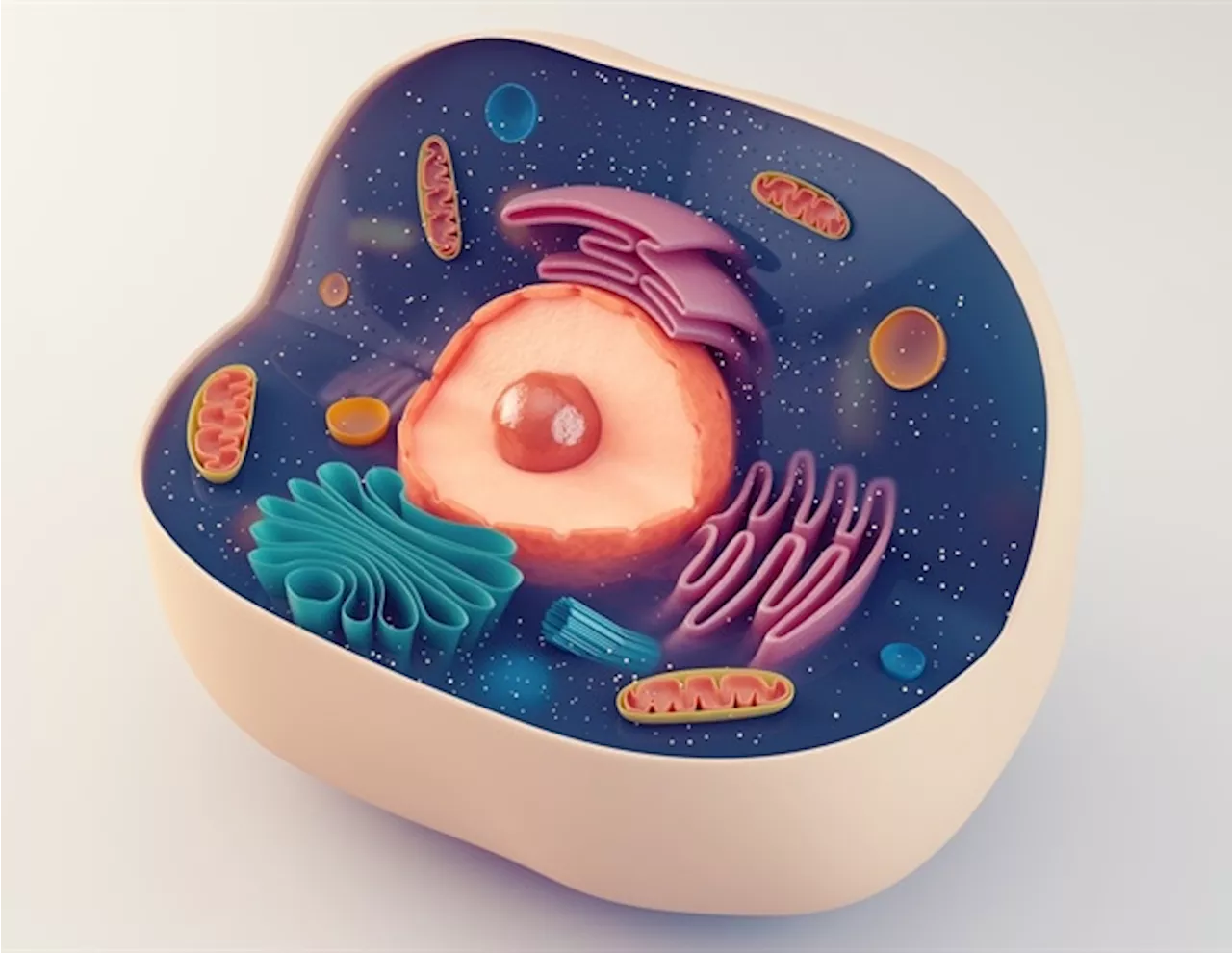 Rice Bioengineers Develop 'Smart Cell' Construction KitRice University bioengineers have made a groundbreaking discovery in synthetic biology, creating a new tool to build custom circuits within human cells that can sense and respond to specific signals.
Read more »
 Rhayader Town Council Exploring Business Body to Develop TownRhayader Town Council is considering the formation of a business body, potentially as a charity, trust, or community interest company, to drive town development projects. The council plans to meet with Powys Association of Voluntary Organisations in late January or early February to explore the options.
Read more »
 DWP to Develop New Digital Channel for Disability and Low-Income Benefit ReportingThe Department for Work and Pensions (DWP) is creating a new digital platform for people receiving disability benefits, low-income benefits, and the State Pension to report changes in their circumstances. This new system, expected to be operational in at least 12 months, will not initially apply to Universal Credit claimants who already use an online journal to communicate with the DWP. The announcement followed inquiries from Conservative MP Neil O'Brien regarding the possibility of reporting a hospital stay via phone or a system similar to 'Tell Us Once'.
Read more »
 'Deliberate' Red Bull act to develop car concept for Verstappen theory quashedMax Verstappen has seen off four Red Bull team-mates...
Read more »
 Tech in 2025: Trump and the tech brosWhat will the Trump presidency mean for the tech world?
Read more »